



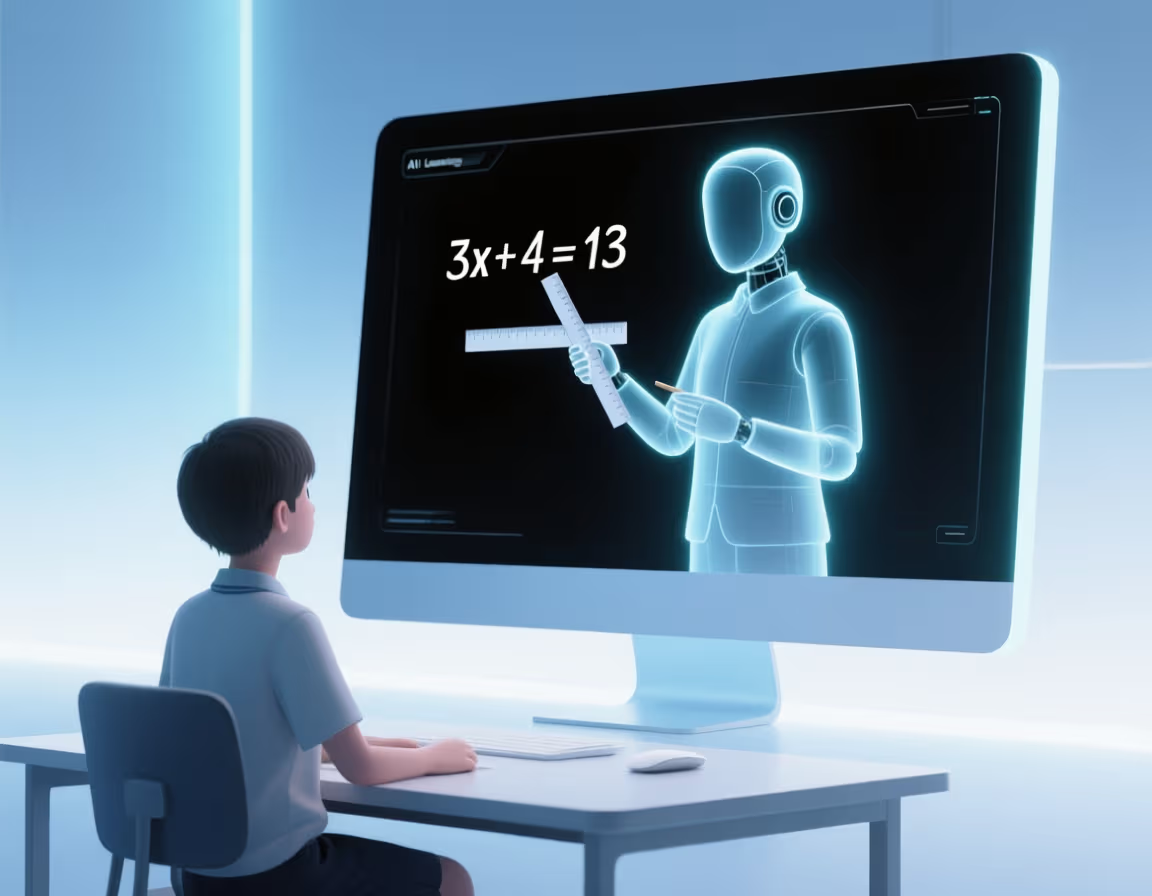
For a long time, being a student meant spending hours in a quiet corner of the library, flipping through massive textbooks, and drowning in a sea of browser tabs trying to find a single relevant research paper.
Today, that old school way of studying is getting a major upgrade. Artificial Intelligence (AI) has stepped out of computer science labs and directly into the hands of students. Far from just a tool to copy-paste answers, AI is acting as a 24/7 personal tutor, an organized study buddy, and a powerful research assistant.
Whether you are preparing for your Class 12 board exams or drafting a major academic research project, here is exactly how AI is changing the game.
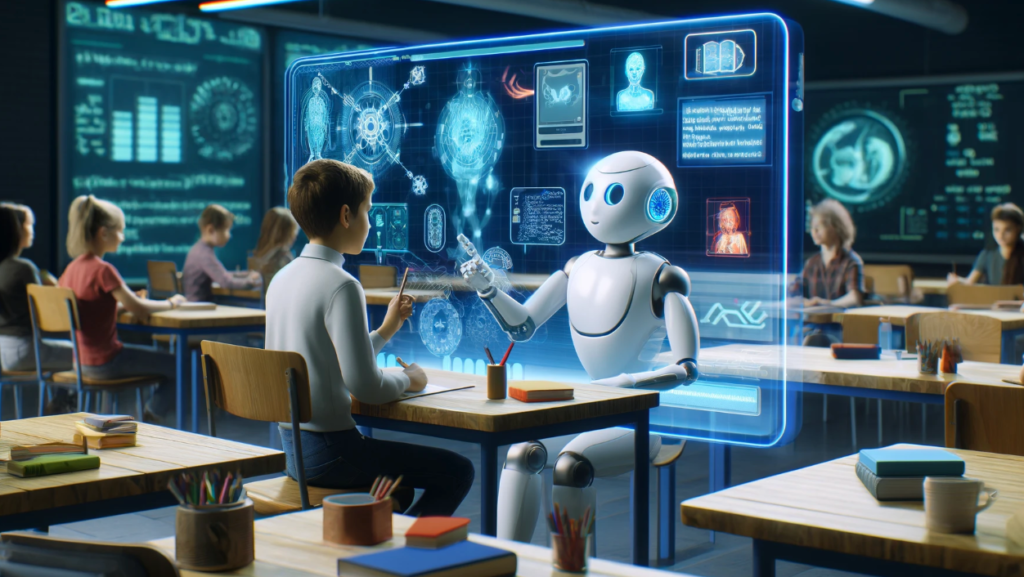
1. The Perfect 24/7 Study Partner
When you are stuck on a difficult concept at midnight—like trying to visualize how a magnetic field interacts with a moving charge—you cannot just call your teacher. This is where AI steps in to clear up confusion.
- Socratic Explanations: Instead of just giving you a flat answer, tools like ChatGPT and Claude can be asked to act like a patient teacher. You can prompt them: “Explain the concept of Electrostatics using a sports analogy,” or “Break down this organic chemistry mechanism step-by-step.” It never gets tired of you asking “but why?” for the tenth time.
- Instant Smart Flashcards: Instead of spending hours writing out study notes by hand, students use AI add-ons in tools like Anki or Quizlet. You can upload a chapter PDF, and the AI will instantly generate customized practice quizzes, formulas sheets, and active-recall flashcards tailored exactly to your syllabus.
- Audio Lecture Summaries: Sitting through a two-hour lecture can be overwhelming. AI tools like Otter.ai can transcribe spoken lectures in real-time, highlight key terms, and generate a neat bulleted summary so you can easily catch up on what you missed.
2. Accelerating Academic Research
Writing a research paper has traditionally been the most exhausting part of student life. Finding credible sources, reading dense academic jargon, and formatting references takes up 80% of the time, leaving very little energy for actual thinking. AI completely flips this ratio.
The table below highlights how specific AI tools take the friction out of the research workflow:
| Research Stage | The Old Way | The AI Way (Tools like Perplexity, SciSpace, Elicit) |
| Literature Search | Typing keywords into search engines and blindly downloading 50 random PDFs. | AI scans millions of papers instantly, filters by your exact question, and provides summaries with direct inline citations. |
| Reading Dense Papers | Spending hours decoding complex academic jargon, statistics, and advanced equations. | You can highlight a confusing paragraph inside a PDF and ask the AI: “Explain this methodology section in plain English.” |
| Connecting Ideas | Manually tracking how different scientific papers relate to or contradict each other. | Tools like ResearchRabbit map out “citation webs,” visually showing you how different authors’ theories connect over time. |
3. The Ultimate Structural Editor
When it comes to writing your actual essay or research report, AI shouldn’t write it for you (that defeats the purpose of learning!), but it excels as a high-level editor.
Instead of asking AI to create a paper from scratch—which often sounds robotic and artificial—smart students write out their raw thoughts, facts, and arguments in simple bullet points. They then feed these notes into academic tools like Paperpal or Grammarly. The AI acts as a digital sculptor: it fixes grammatical snags, smooths out awkward sentence transitions, and adjusts the language to match a formal academic tone.
4. The Golden Rule: Keeping it Ethical
While AI is incredibly powerful, it has one major flaw: it can confidently hallucinate. If an AI doesn’t know the answer to a niche research question, it will sometimes invent fake facts or completely fabricate non-existent book citations.
The Researcher’s Responsibility: AI is an excellent assistant, but a terrible master. Every fact, quote, and citation generated by an AI must be manually double-checked by you against a real textbook or verified academic journal.
Conclusion
AI is turning the stressful, chaotic process of studying and researching into a streamlined, structured journey. By taking care of tedious tasks like sorting data, formatting bibliographies, and summarizing text, AI frees up your brainpower for what matters most: critical thinking, asking deep questions, and genuinely understanding the world around you.