



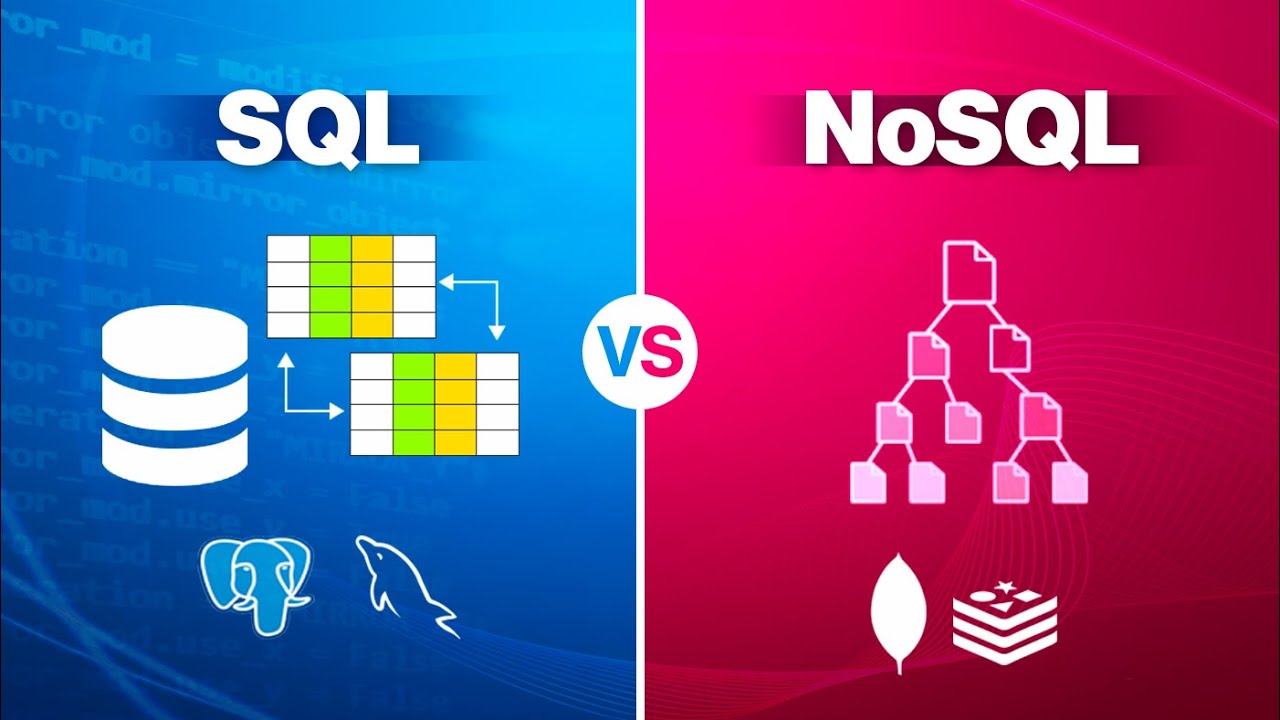
Selecting the right database is one of the most critical architectural decisions a developer makes. Your database dictates how your website stores, retrieves, and manages information. In the modern tech landscape, the debate between SQL (Relational) and NoSQL (Non-relational) databases is central to system design.
To build an efficient, scalable website, you must understand when to prioritize structure (SQL) and when to prioritize flexibility (NoSQL).
Understanding the Basics
SQL (Relational Databases)
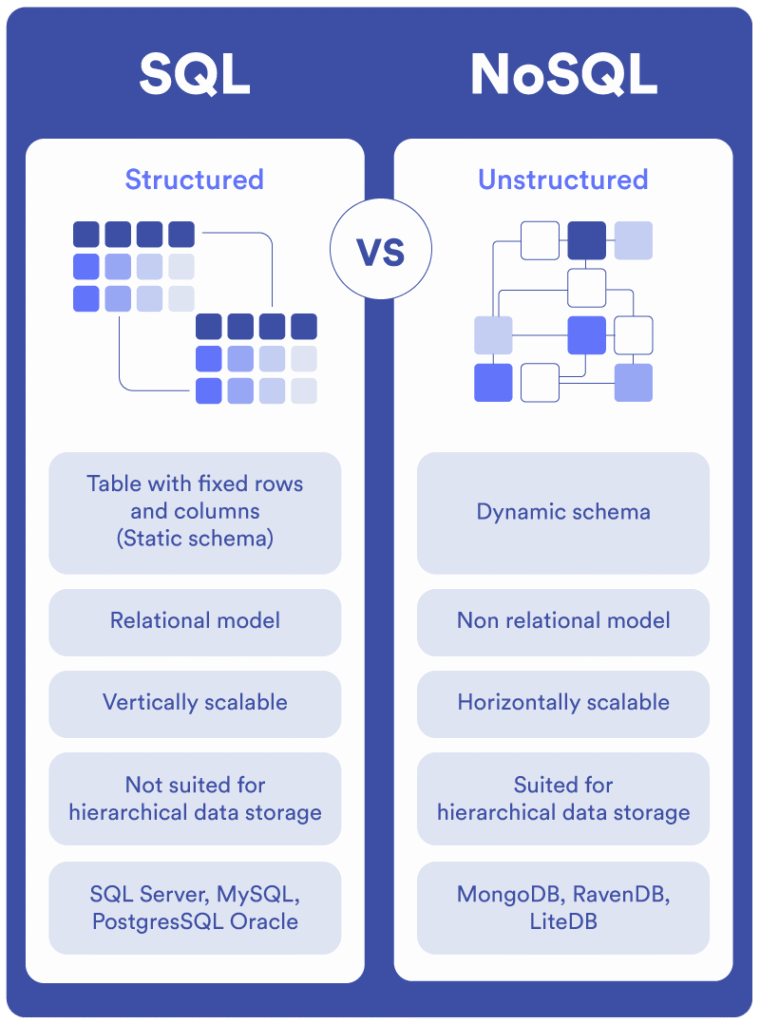
SQL (Structured Query Language) databases, such as PostgreSQL and MySQL, store data in tables with fixed rows and columns. They are built on a strict schema, meaning you must define exactly what your data looks like before you can insert it. They are famous for ACID compliance (Atomicity, Consistency, Isolation, Durability), which ensures that every transaction is processed reliably and accurately.
NoSQL (Non-relational Databases)
NoSQL databases, such as MongoDB, Redis, or Cassandra, are designed for flexibility. They store data in various formats—documents (JSON), key-value pairs, or graphs. You do not need a pre-defined schema, allowing you to add new data fields on the fly without breaking the rest of your application.
When SQL is Important: The “Structured” Choice
SQL is the bedrock of applications where data integrity is non-negotiable.
1. E-Commerce Platforms
- Why: In an online store, consistency is everything. If a user buys a product, the inventory count must decrease, and the payment record must be saved. SQL ensures these operations happen as one single “atomic” transaction.
- Best for: Processing payments, managing inventory, and handling complex relationships between orders, customers, and products.
2. Banking and Financial Applications
- Why: Financial data requires high-level ACID compliance. You cannot afford to lose a transaction or have a balance mismatch. The rigid, predefined structure of SQL prevents human error and data corruption.
3. Applications with Complex Relationships
- Why: If your website relies on linking data—such as a social media platform where “Users” follow “Groups,” which contain “Posts,” which have “Comments”—SQL’s ability to perform complex “JOIN” operations is essential. It allows you to query linked data efficiently.
When NoSQL is Important: The “Flexible” Choice
NoSQL is the hero for modern applications that handle massive amounts of unstructured, rapidly changing data.
1. Content Management Systems (CMS) and Blogging
- Why: A blog post or a news article often has a varying structure. One post might have a video, another an image gallery, and a third might have embedded social media links. A document-based NoSQL database like MongoDB allows you to store these as a flexible JSON object without needing to update your entire database schema every time you change your layout.
2. Real-Time Analytics and Caching
- Why: NoSQL databases are optimized for speed and high-throughput. For instance, Redis is a key-value store used specifically for caching. It allows websites to serve frequently accessed data in milliseconds, drastically improving site performance.
3. Large-Scale Web Apps with Rapid Growth
- Why: NoSQL is designed to scale horizontally across many servers. If your website goes viral and you need to store petabytes of user logs, clickstream data, or profile preferences, NoSQL allows you to add more hardware easily without the performance overhead of complex table joins.
Comparison at a Glance
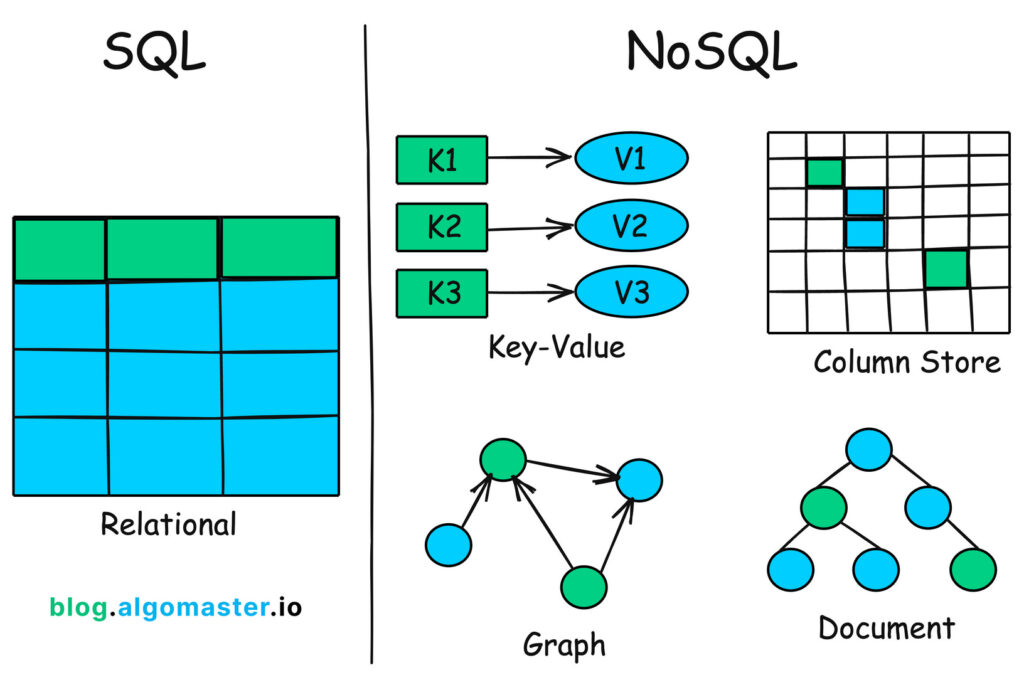
| Feature | SQL (Relational) | NoSQL (Non-relational) |
| Data Format | Tables (Structured) | Documents/Key-Value (Flexible) |
| Schema | Rigid/Predefined | Dynamic |
| Scalability | Vertical (Add more power) | Horizontal (Add more servers) |
| Complexity | Best for complex queries | Best for simple, high-speed data |
| Integrity | ACID Compliant | Often BASE (Eventual consistency) |
How Data Selection Affects Website Speed
You asked how this helps a website become “fast.” Your choice of database directly impacts your response time:
- SQL for Optimization: If your website requires precise reporting, SQL is faster because it can filter and sort large datasets through highly optimized query plans. However, if your table becomes too large, queries can slow down if not indexed correctly.
- NoSQL for Latency: If your website is slow because it hits the main database for every user request, Redis (NoSQL) is the solution. By caching the results of your most frequent SQL queries in Redis, you effectively bypass the slow database search, making the website feel instantaneous.
Final Verdict: The “Polyglot” Approach
Most modern large-scale websites don’t pick just one; they use a Polyglot Persistence strategy.
- They use SQL (like PostgreSQL) as their “Source of Truth” to handle orders, user accounts, and billing.
- They use NoSQL (like MongoDB) to store content, user profiles, or product variations that change frequently.
- They use NoSQL (like Redis) as a cache layer to ensure their API calls and website pages load in milliseconds.
As a developer, stop thinking about which one is “better” and start thinking about which one fits the data model of your feature. Use SQL when accuracy and structure are the priority; use NoSQL when speed, scale, and flexibility are the drivers of your user experience.